Source Elevated Platform Pergola Bracket for Patio, Gazebo, Backyard
Compare 30 options for the elevated platform pergola bracket designed for outdoor structures. Buyers can evaluate stainless steel and metal models with welding connections, powder coating, and custom sizes suitable for pergolas, gazebos, and timber framing projects.
Key considerations
Products List






Comprehensive Sourcing Guide
Sourcing Guide for Elevated Platform Pergola Brackets
Navigating the procurement landscape for elevated platform pergola brackets requires a disciplined approach that balances structural integrity with aesthetic requirements. These components serve as the critical interface between vertical supports and horizontal beams, ensuring stability for outdoor structures such as gazebos, pavilions, and heavy-duty pergolas. The market offers a diverse array of options ranging from simple metal connectors to complex, adjustable saddle systems. Buyers must carefully distinguish between generic metal brackets and specialized heavy-duty solutions designed for specific architectural loads. This guide synthesizes available product attributes and industry standards to provide a robust framework for sourcing decisions, focusing on material composition, customization capabilities, and quality verification protocols.
Technical Specifications and Material Composition
The foundation of any reliable pergola bracket lies in its material composition and manufacturing process. Analysis of current market offerings reveals a strong preference for stainless steel and medium carbon steel as primary materials. Stainless steel is frequently cited for its corrosion resistance, making it a suitable choice for outdoor applications exposed to the elements. In contrast, medium carbon steel offers high tensile strength, which is essential for heavy-duty structural applications where load-bearing capacity is paramount. The surface treatment processes observed in the supply chain include galvanization and powder coating. Galvanized sheet treatments provide a protective layer against rust, while powder coating adds an additional barrier and allows for color customization, with black being a common finish observed in heavy-duty listings.
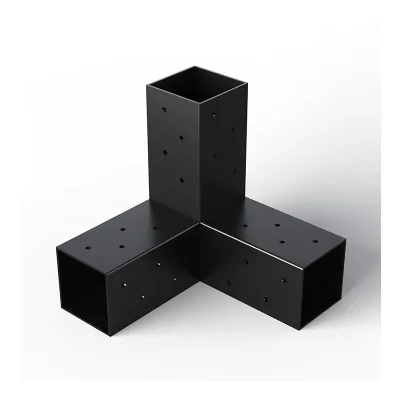
The structural design of these brackets varies significantly based on the intended application. Common configurations include single-side brackets and adjustable saddle roof riser posts. The adjustable saddle design is particularly valuable for elevated platforms where precise leveling is required to accommodate uneven ground or structural settling. Conversely, unadjustable models offer a fixed geometry that may be preferable for standardized, repetitive installations. The head type is another critical specification, with "Allotype" designs appearing in specific heavy-duty contexts, suggesting a universal fit for various beam profiles. Dimensions are a primary driver of compatibility; observed specifications include standard timber framing sizes such as 100x100mm, 100x150mm, 75x150mm, and 100x200mm, alongside custom dimensions like 4x4 or 6x6 inches. Buyers must verify that the bracket's internal geometry matches the exact cross-section of their timber or steel posts to ensure a secure fit.
Compliance, Certification, and Quality Assurance
When sourcing structural hardware, verifying compliance with quality management systems is essential for mitigating risk. While specific product certifications can vary by batch and manufacturer, the presence of ISO9001:2015 certification is a notable indicator of a supplier's commitment to consistent quality control. This standard ensures that the manufacturing process, from raw material intake to final packaging, adheres to rigorous documented procedures. However, buyers should not assume that every listed product automatically carries this certification; it must be explicitly confirmed for the specific order.
Quality assurance extends beyond paper certifications to include physical inspection protocols. Reputable suppliers in this sector often employ a combination of in-house inspections and third-party testing. The inspection process typically covers dimensional accuracy, weld integrity, and surface finish consistency. For elevated platforms, the structural framework is often timber-based, requiring brackets that can withstand significant shear and tensile forces. The manufacturing arts involved, such as metal cutting, bending, blanking, piercing, and forming, must be executed with precision to prevent weak points. Buyers should request evidence of these inspection processes, particularly for large-scale projects where the failure of a single bracket could compromise the entire structure. Additionally, the use of design software like Auto CAD, PRO/E, Solidworks, and Ug (supporting formats like Dwg, Dxf, Igs, and St) indicates a capability for precise engineering and customization, which is vital for complex architectural projects.
Cost Drivers and Pricing Variables
The pricing structure for pergola brackets is influenced by a complex interplay of factors, including material costs, customization levels, and order volume. The observed price range in the market is extensive, spanning from approximately $0.10 to $1,688 per unit or lot. This wide variance is not indicative of a single product line but rather reflects the diversity of specifications. A basic, uncoated metal bracket will naturally cost significantly less than a heavy-duty, powder-coated, custom-fabricated unit designed for a specific architectural project.
Material selection is a primary cost driver. Stainless steel commands a premium over standard carbon steel due to its superior corrosion resistance and durability. Similarly, the extent of surface treatment impacts price; galvanized and powder-coated finishes add value but increase the unit cost. Customization is another significant variable. While many suppliers offer standard sizes, the ability to produce "Custom Made to Size, Thickness and Finish" allows for tailored solutions but introduces higher manufacturing complexity and cost. The Minimum Order Quantity (MOQ) also plays a crucial role in the effective unit price. MOQs observed range from 1 to 4,800 units. Smaller orders typically incur a higher per-unit cost due to setup fees and lower economies of scale, whereas bulk orders can significantly reduce the average cost. Buyers must balance their immediate project needs with long-term inventory costs, considering that packaging in cartons (often with standard dimensions like 500x600x500mm) affects shipping efficiency and total landed cost.
Typical Applications and Structural Integration
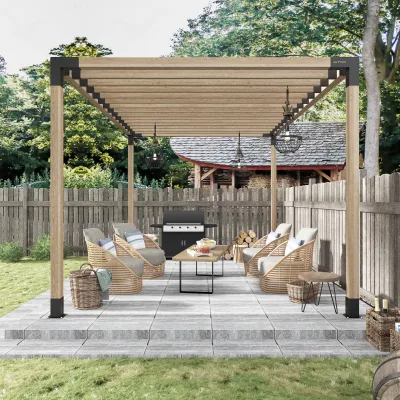
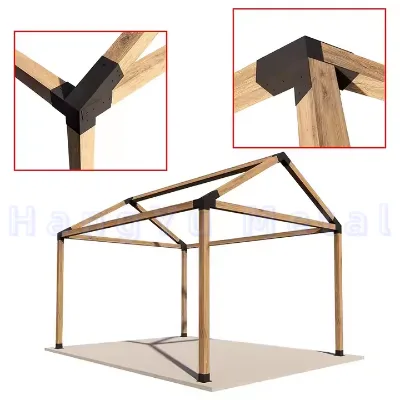
The versatility of elevated platform pergola brackets is evident in their diverse applications. These components are primarily designed for outdoor environments, including patios, backyards, and gardening spaces, where exposure to weather necessitates robust construction. The specific application often dictates the bracket's design. For instance, "Pergola Roof Riser Beam Brackets" are engineered to support the weight of a roof structure, transferring loads from the beams down to the posts. In timber framing projects, these brackets serve as post-to-column beam connecting caps, ensuring a secure connection between vertical and horizontal elements.
The structural framework of the project is a key consideration. While many applications involve timber structures, the brackets are also compatible with steel posts and columns. The "Heavy Duty Beam Bracket Pergola" designation suggests a specific subset of products designed for higher load requirements, such as those supporting elevated platforms or multi-story pergola structures. The usage extends beyond simple support; these brackets function as mount kits for gazebos and patio covers, often requiring waterproof capabilities to prevent moisture ingress that could lead to structural decay. The style of the bracket, ranging from "Simple Modern" to "Country Style," also influences its suitability for different architectural aesthetics. Buyers must ensure that the chosen bracket not only meets the structural demands but also aligns with the visual design intent of the project, whether it is a contemporary patio or a traditional garden pavilion.
Supplier Evaluation and Customization Capabilities
Selecting the right supplier requires a thorough evaluation of their manufacturing capabilities and service offerings. A critical differentiator in this market is the ability to provide OEM (Original Equipment Manufacturer) and ODM services. Many suppliers advertise "Customized OEM" capabilities, allowing buyers to specify exact dimensions, thicknesses, and finishes. This flexibility is essential for projects with unique architectural requirements that cannot be met by off-the-shelf products. The supplier's software proficiency, utilizing tools like Auto CAD and Solidworks, is a strong indicator of their ability to translate custom design requirements into precise manufacturing instructions.
The origin of the product is another factor to consider. A significant portion of the market originates from Hebei, China, a region known for its manufacturing infrastructure. While this location offers competitive pricing and a wide range of suppliers, buyers must conduct due diligence regarding the supplier's specific track record. The "Service" attribute often highlights a commitment to custom orders, but the reliability of delivery and communication is paramount. Buyers should verify the supplier's capacity to handle "All Custom to Your Project" requests without compromising on quality. Additionally, the packaging method, typically cartons, should be evaluated to ensure it protects the brackets during transit, especially for large or heavy-duty items. The presence of a "Brand Name" such as Surealong suggests established market players, but buyers should not rely solely on brand recognition; direct verification of the specific product's attributes and certifications is necessary.
Long-Term Procurement and Maintenance Considerations
Procuring pergola brackets is not merely a transactional event but a long-term investment in the safety and longevity of the structure. The durability of the bracket is directly linked to its material and surface treatment. Stainless steel and galvanized finishes are preferred for their resistance to environmental degradation, which is crucial for outdoor installations. Powder coating adds an extra layer of protection and can be customized to match the surrounding environment, reducing the visual impact of the hardware. However, buyers must recognize that no finish is entirely maintenance-free; regular inspections are recommended to check for signs of wear, corrosion, or loosening of fasteners.
The "Adjusted" versus "Unadjustable" nature of the bracket also has long-term implications. Adjustable saddle roof riser posts offer the advantage of accommodating minor structural shifts over time, which can occur in elevated platforms due to settling or thermal expansion. Unadjustable models, while robust, require precise installation to ensure they remain effective throughout the structure's lifespan. Buyers should also consider the "Folded" status of the product; most brackets are supplied in an "Unfolded" state, ready for immediate installation, which simplifies the assembly process. Finally, the "Industry Served" and "Industries Apply" attributes indicate the bracket's suitability for specific sectors, such as construction or landscaping. Ensuring that the selected bracket aligns with the specific demands of the industry, such as the need for "Waterproof" performance in gardening applications, is vital for long-term satisfaction and structural integrity.
FAQs
What materials are used for elevated platform pergola brackets?
Stainless steel and medium carbon steel are the primary materials used for these brackets. Stainless steel offers corrosion resistance for outdoor use, while medium carbon steel provides high tensile strength for heavy-duty structural applications requiring load-bearing capacity.
Can I find adjustable saddle roof riser post brackets?
Yes, adjustable saddle roof riser post brackets are available for precise leveling on uneven ground. Some listings also offer unadjustable models with fixed geometry, suitable for standardized installations where specific settling accommodation is not required.
Which certifications verify the quality of these metal brackets?
ISO9001:2015 certification is a notable indicator of consistent quality control in the manufacturing process. Buyers should verify this explicitly for specific orders, as it ensures adherence to rigorous documented procedures from raw material intake to final packaging.
How are these brackets typically packaged for shipping?
These brackets are typically packaged in cartons with standard dimensions like 500x600x500mm. This packaging method protects the items during transit and affects shipping efficiency, which is a key factor in calculating the total landed cost for bulk orders.
What customization options exist for custom made brackets?
Suppliers offer custom made brackets tailored to specific size, thickness, and finish requirements. This includes using design software like Auto CAD and Solidworks to translate unique architectural needs into precise manufacturing instructions for tailored solutions.
Where are these heavy duty beam brackets manufactured?
A significant portion of these brackets originates from Hebei, China, a region known for its manufacturing infrastructure. Buyers should verify the specific supplier's track record and capacity to handle custom orders without compromising on quality or delivery timelines.